
Description
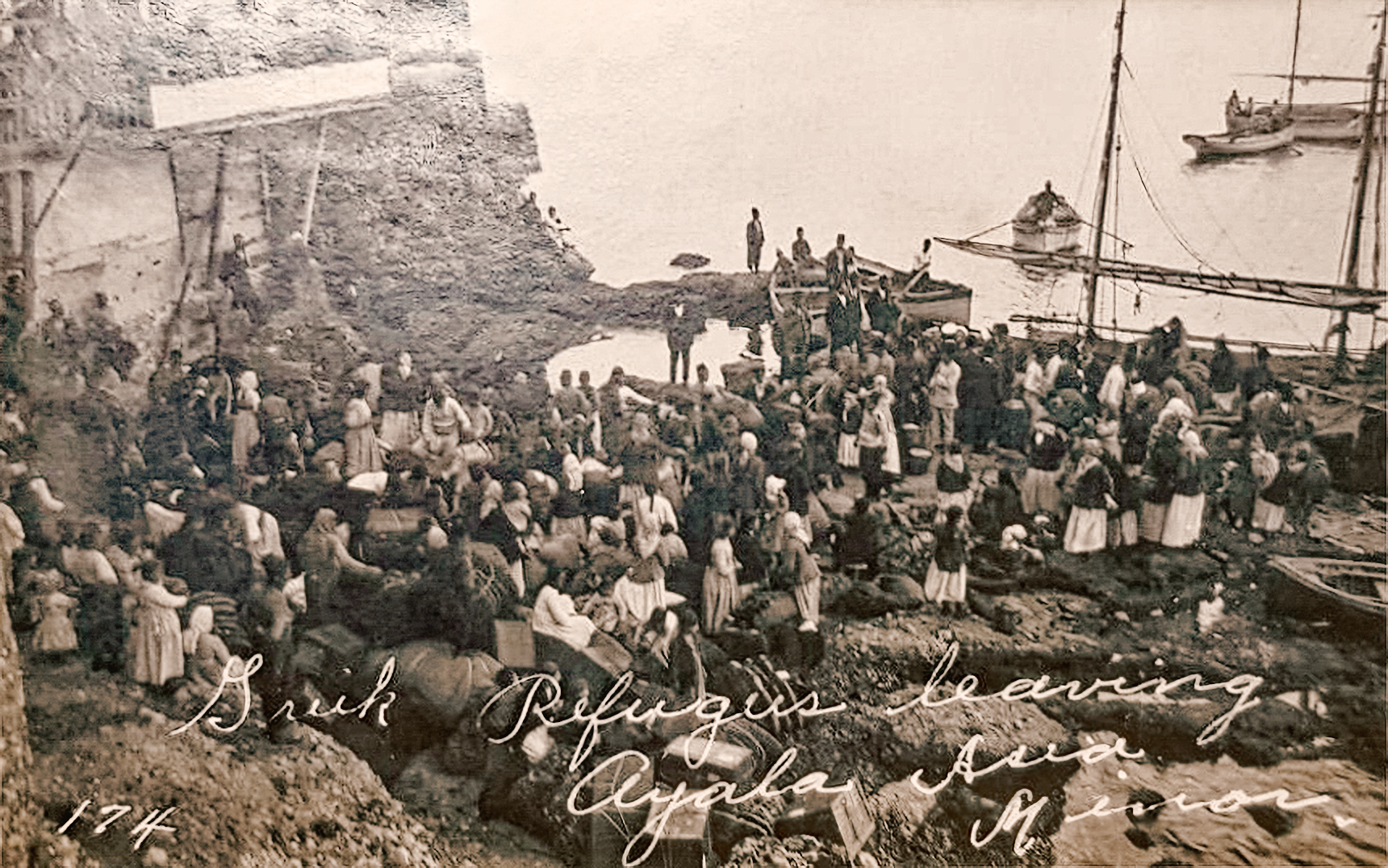
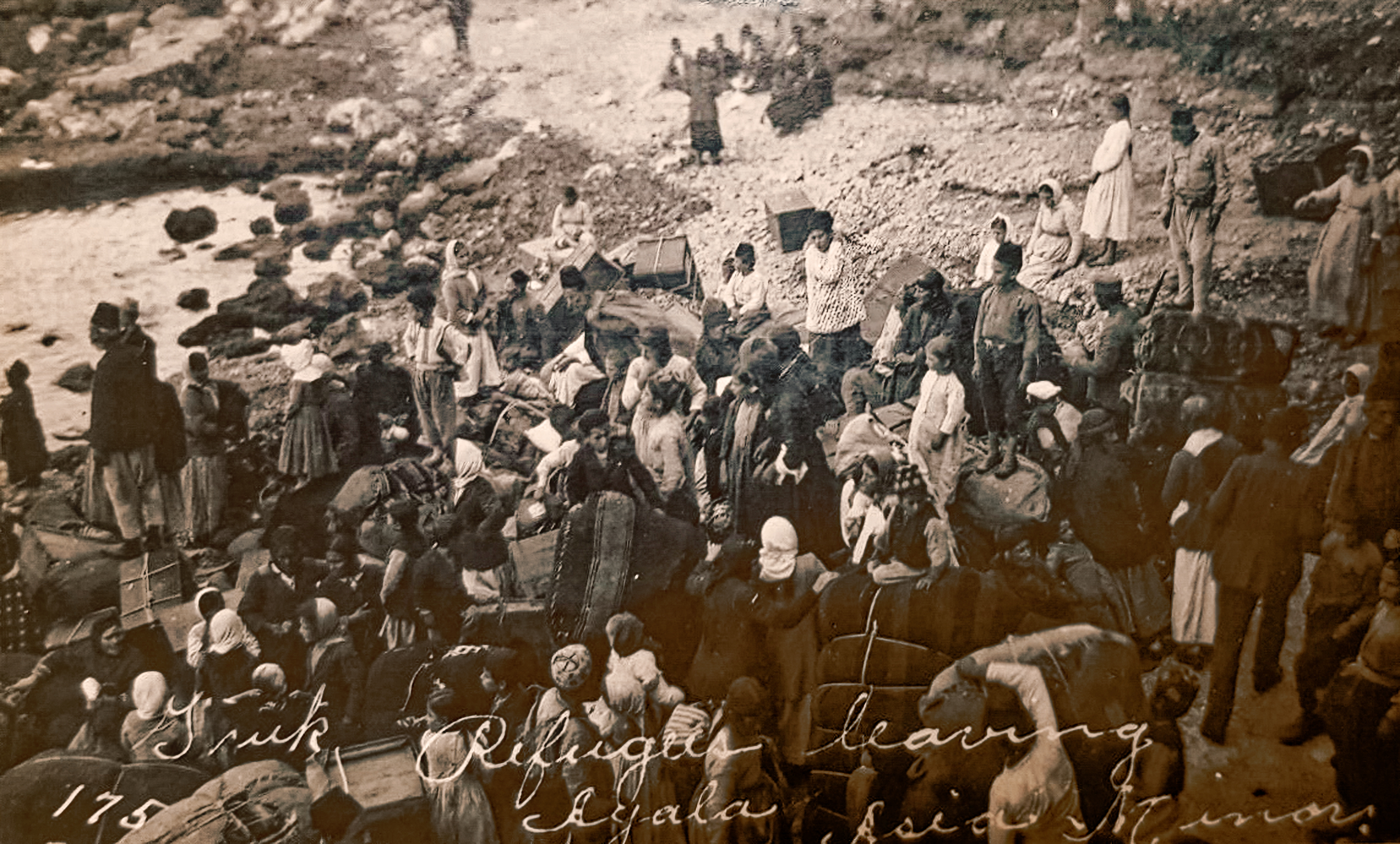
Boarding took place under intense pressure and within an extremely narrow time window, as the town was already under the control of Turkish authorities and any delay could prove fatal.
The frames reveal the full social stratification of Alaya: women in traditional dress, children with improvised bundles, elderly people carrying trunks, as well as men in fezzes—headwear that had been imposed from the 19th century onward as a means of uniformity within the Ottoman population. The vessels that transported the refugees—recorded in multiple international sources—were mainly merchant and requisitioned steamships, such as the SS Indannie, which appears in the inscriptions on the photographs themselves. The transport proceeded toward the southern coasts and subsequently toward Greece, along a route repeated by thousands of Asia Minor Greeks.
The gathered crowd, the density of objects, and the disorder of the moment—personal testimonies, households transferred almost in full to the shore within hours—capture the abrupt and violent end of a flourishing Greek community with centuries-long presence in Alaya. The October 1922 exodus marks the final episode of the organised removal of the Greek population from the area: a traumatic yet historically critical moment that decisively shaped the fate of the people of Alaya and led to their resettlement in Nea Ionia and other parts of Greece.