
Description
Operating principle
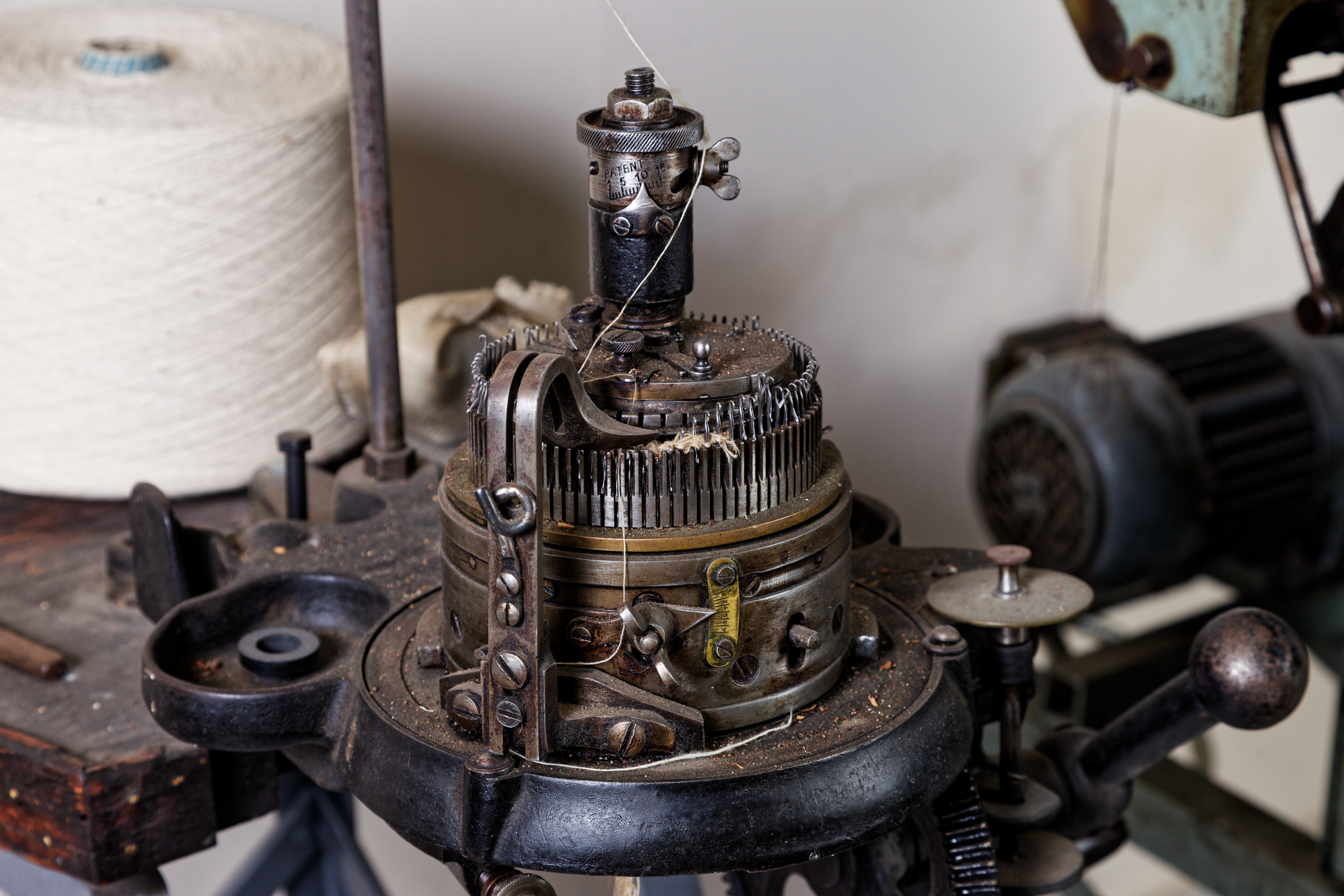
Its function is based on three main systems:
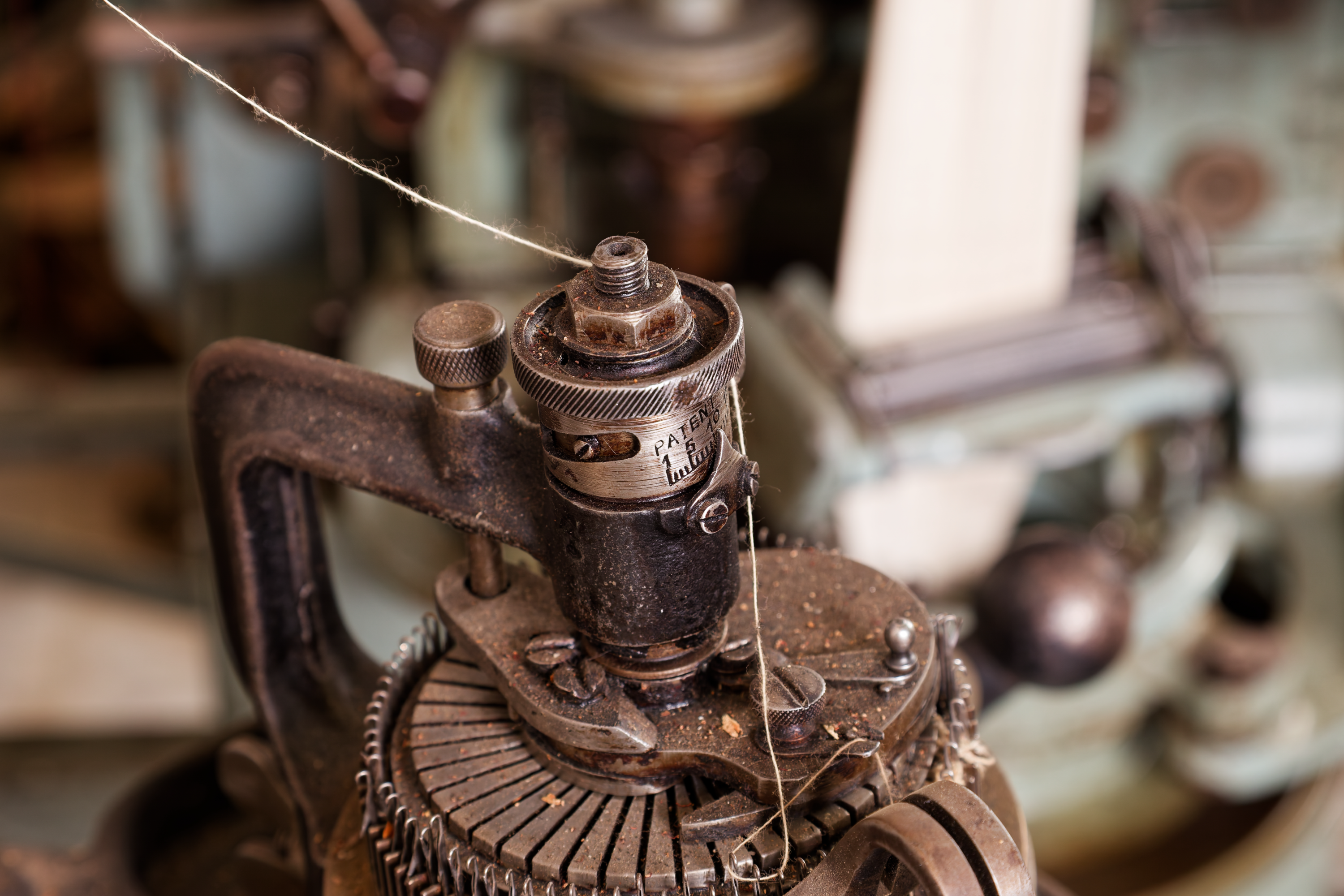
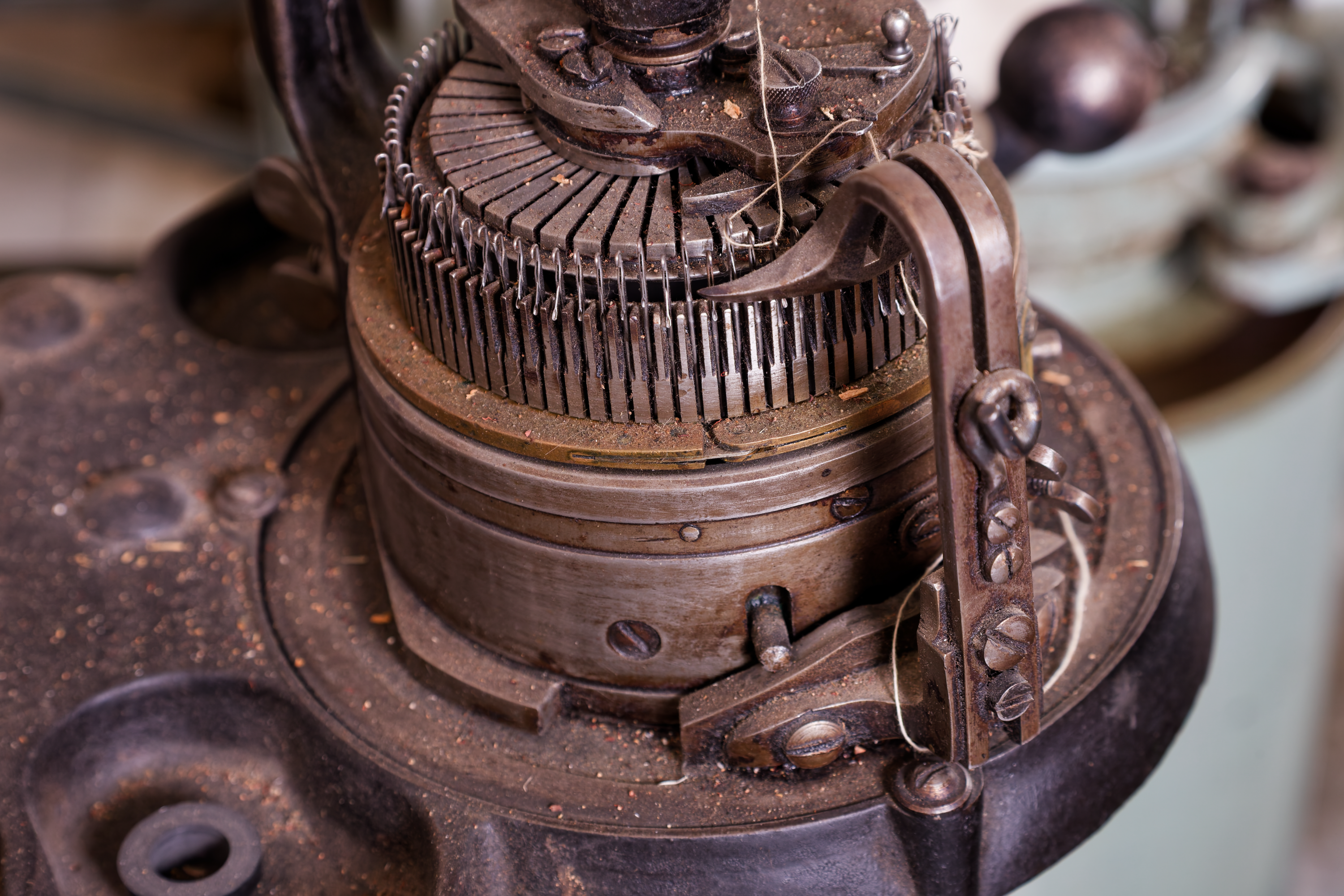
Cylinder with latch needles:each needle moves up and down following the cam ramps. The latch needles, with their characteristic tongues, allow continuous knitting without manual intervention.
Yarn feeding system:the yarn passes through the tensioner, runs through small guides, and enters the path of the needles. Stable tension is crucial for an even knit.
Hand crank:the operator turns the crank continuously, controlling speed. Fabric quality depends on a steady rotational rhythm; the operator has also suspended a pointed iron weight to ensure smooth knitting and to prevent the knit from catching on the needle cylinder.
The result is a continuously forming tube of knit emerging from the interior of the machine, used mainly for socks, tights, and fine tubular textiles.
After 1922, many refugees from Asia Minor relied for their livelihood on such small hand-cranked hosiery machines. With them they set up the first knitting workshops in the communities that would later form Nea Ionia. These workshops often operated inside homes, with production carried out by women and men of the family.
The hand-crank hosiery machine became a cornerstone of the region’s knitwear industry. The first knitters trained on machines like this, and from their expertise larger factories later emerged, making Nea Ionia the country’s leading centre of knitwear production. It is exhibited at the Textile Museum of KE.MI.PO., Municipality of Nea Ionia.
Kindly made available for photography by KE.MI.PO., Municipality of Nea Ionia.