
Description
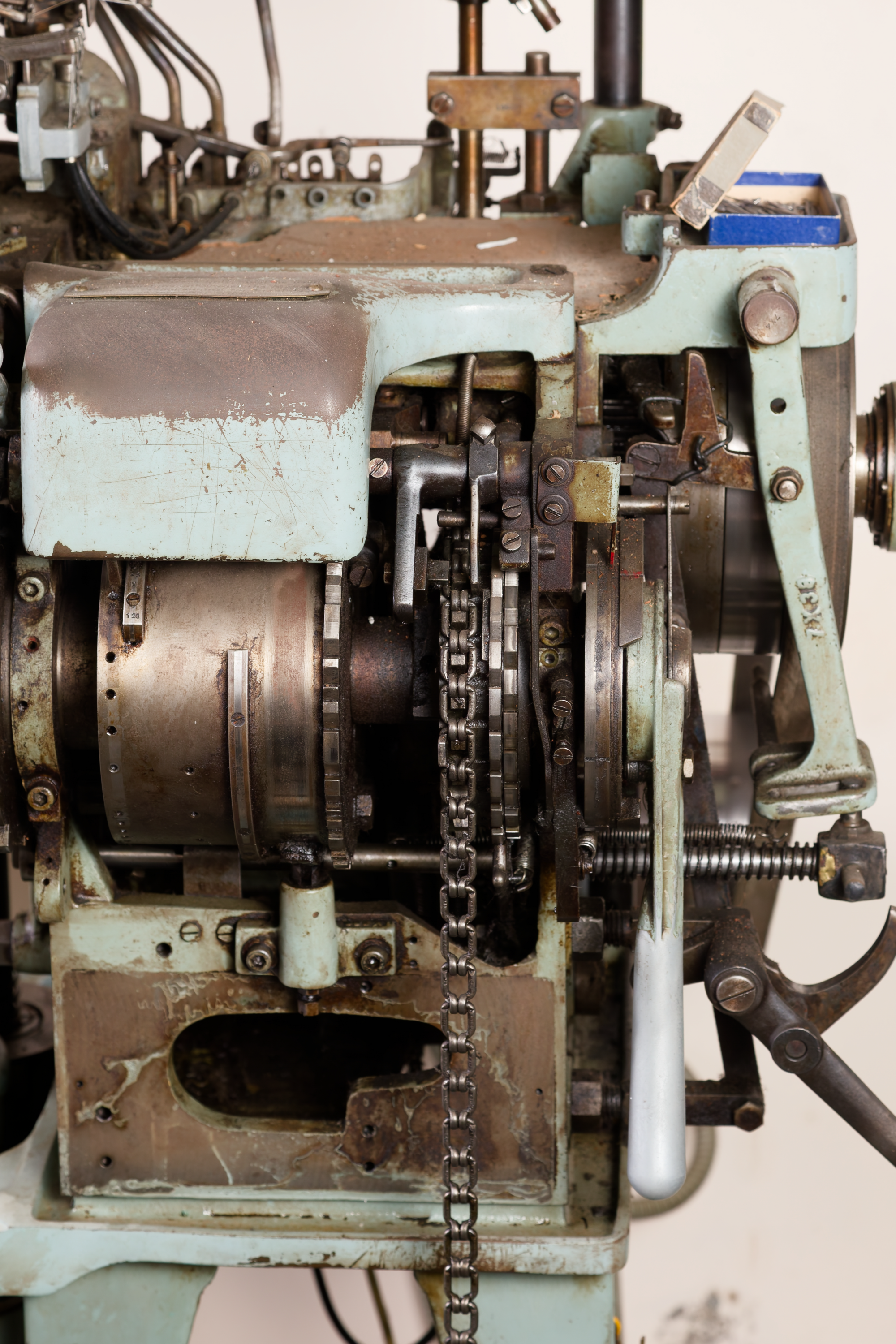
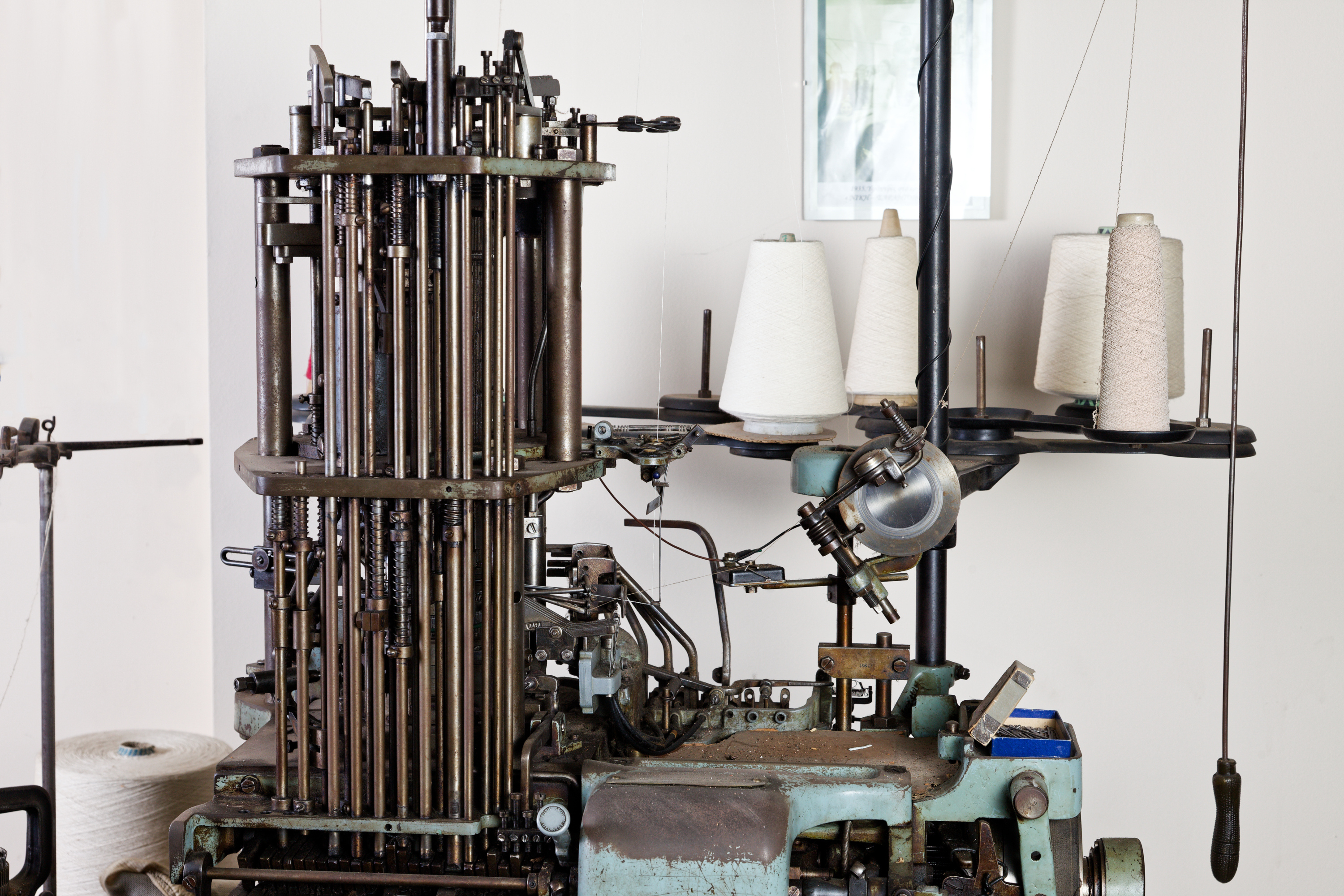
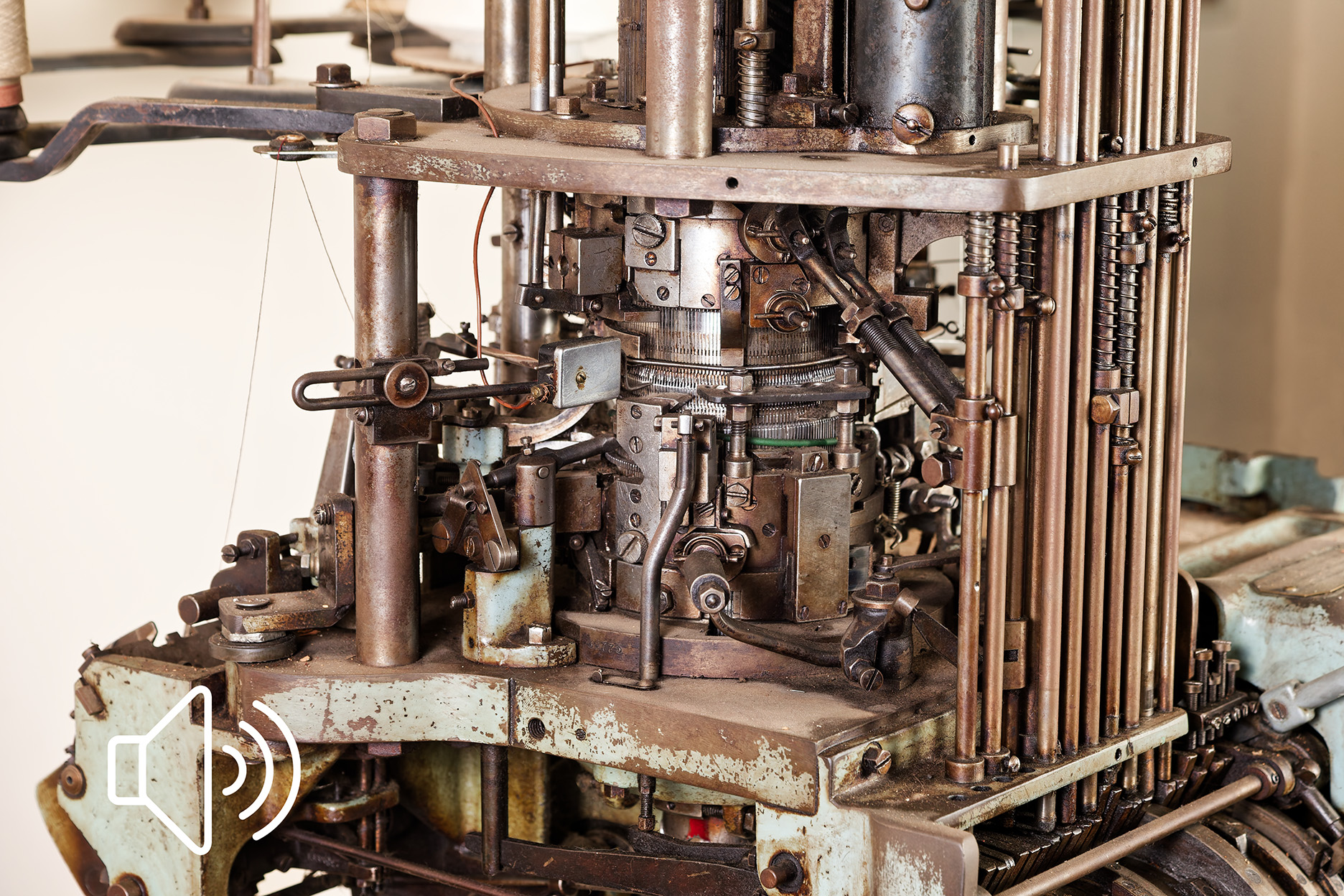
The COMET operates with a rotating cylinder fitted with numerous metal latch needles; the rotation of the cylinder, together with the opening and closing motion of the needle latches, enables the creation of a continuous tubular knit that forms the basis of a sock. Selection discs—a system of circular metal plates with holes and projections—determine which needles are raised or left inactive, allowing the production of various patterns, such as openwork, stripes, or reinforced areas where greater durability is required. The transition from ribbing to plain knitting, the shaping of the heel and toe, and the overall forming of the sock are achieved through mechanically synchronised movements without electronic control, a process that demanded considerable experience from the operator.
The machine is constructed from heavy cast-iron alloys and steel to withstand vibration and continuous use, while the moving parts—needles, guides, levers, and carriages—are precision-made, since even a minor fault could cause breaks or flaws in the knit.
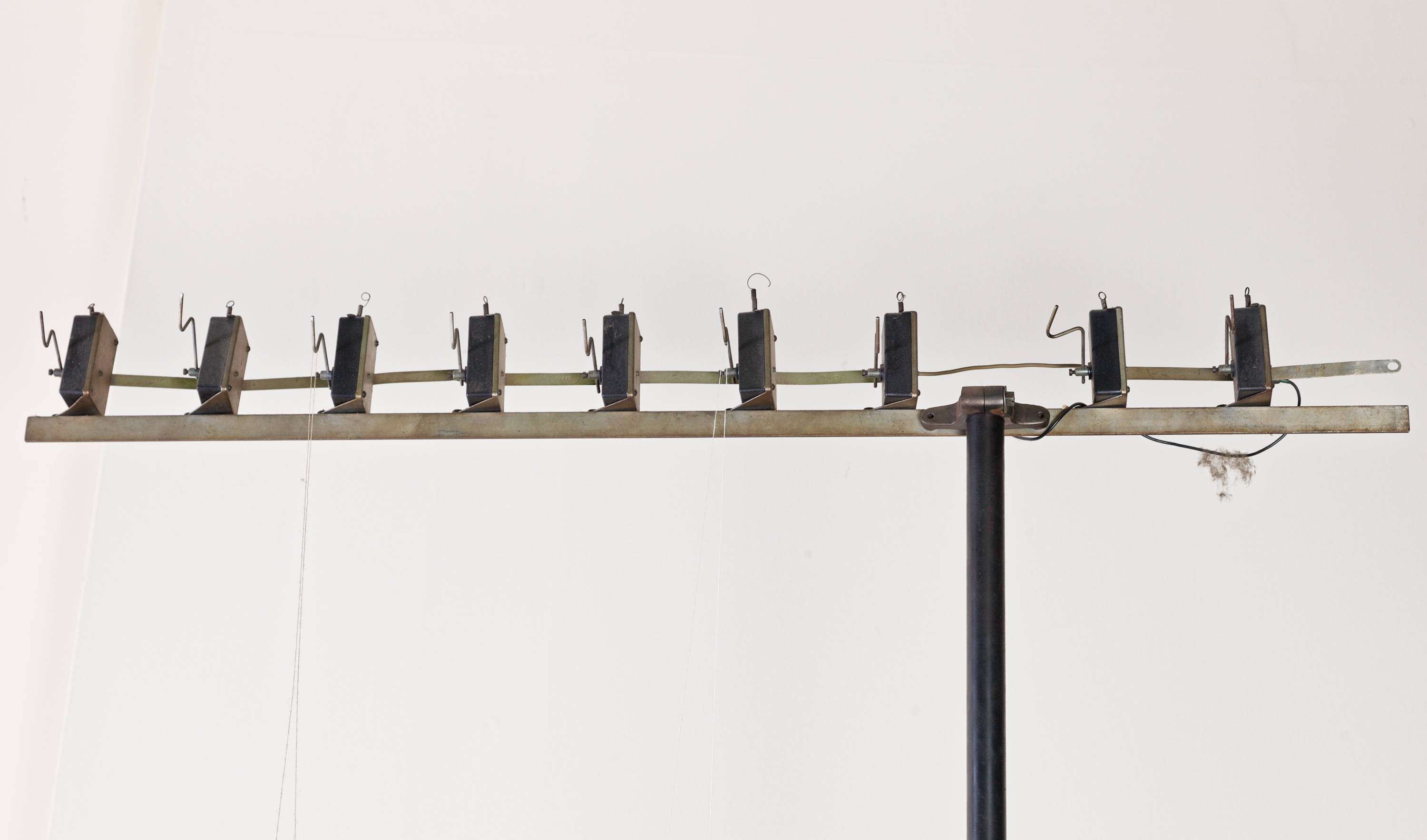
Despite its size and apparent complexity, the COMET is a remarkable example of purely mechanical technology: without electronics, it relies entirely on settings, levers, discs, and springs to produce thousands of stitches per minute. In the small workshops of Nea Ionia, a machine of this kind was a key tool of survival, enabling large-volume sock production, while its adjustment and operation constituted a specialised skill in itself. The COMET is directly linked to the city’s economic history, representing the period when Nea Ionia was called the “Manchester of Greece”—an era of intense creativity, technical expertise, and industrial prosperity, when textiles and knitwear shaped the identity of the entire community. It is exhibited at the Textile Museum of KE.MI.PO., Municipality of Nea Ionia.
Kindly made available for photography by KE.MI.PO., Municipality of Nea Ionia.