Skip to content Skip to footer

Father Charalambos

Epitrachelion, Cross, and Liturgical Books
Father Charalambos Argyriou, Cypriot by origin, served the Greek Orthodox community of Alaya in the late 18th and early 19th century, undertaking duties in the Castle churches—Saints Constantine and the Archangels—of the Greek quarter of Top Hane.

A widower, he came to Alaya accompanied by his young daughter Maria, offering many years of pastoral service and becoming deeply beloved. His presence left a profound mark on the lives of the Alaya Greeks of the period, who remembered him for his spiritual guidance and his austere yet enlightened character.

Father Charalambos’s grave lay behind the sanctuary of Saints Constantine. According to oral testimonies from local Turks, during exhumation his body emitted a fragrant scent—an event remembered by residents as a sign of holiness. After the expulsion, his daughter Maria, continuing a family tradition, settled first in Katakolo and later in Drapetsona, where she operated a bakery—as she had done in Alaya. Preserved today are his epitrachelion, his personal cross, and a series of liturgical books, valuable documents of the worship practices of Greek Orthodox populations in Asia Minor.

Category: Product ID: 20983

Description

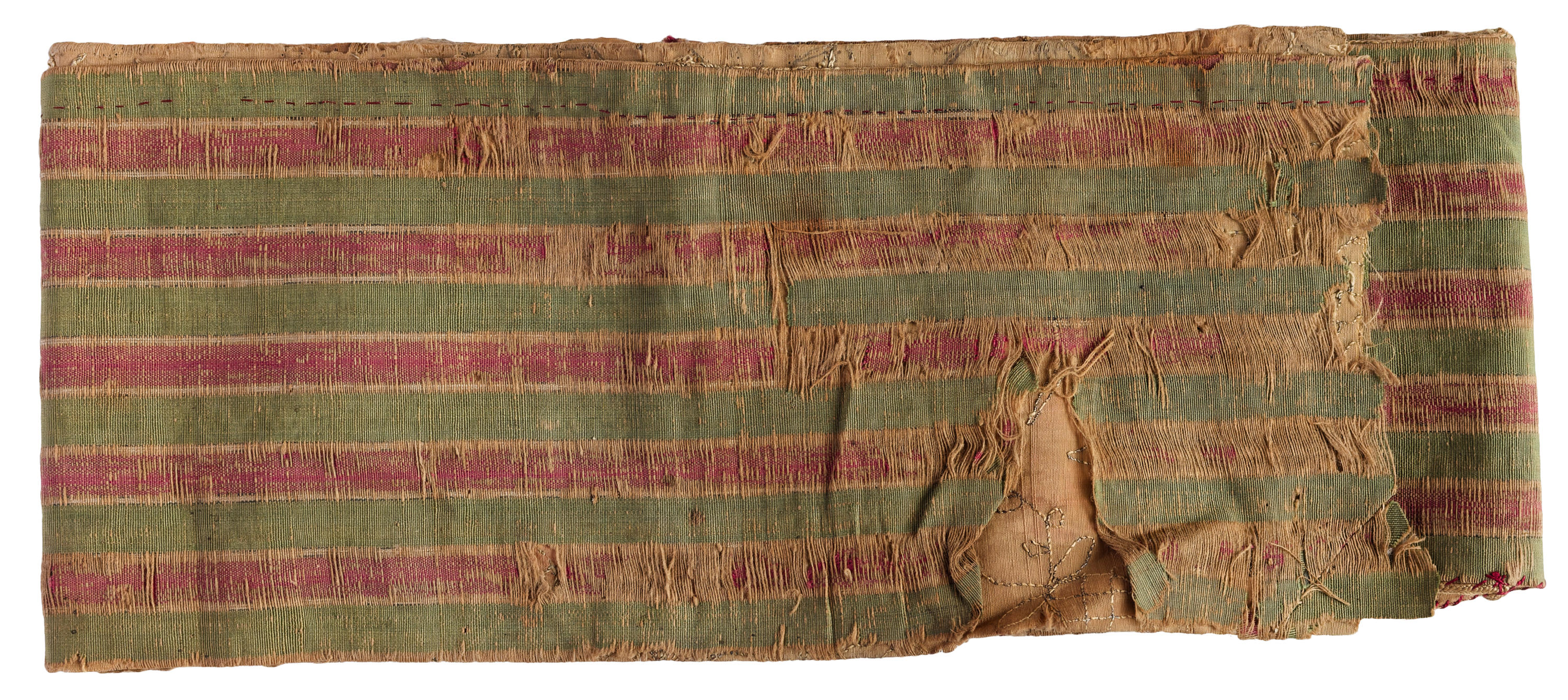
The Epitrachelion
Loom-woven, with characteristic horizontal green and rose-red bands, it bears visible traces of long use: wear, thinning of the weave, and hand repairs. Its materials (a cotton or linen ground with silk or cotton threads) attest to local textile production in 18th–19th-century Anatolia. In the lower area, remnants of goldwork embroidery—likely vegetal motifs—are visible, pointing to liturgical use and the everyday wear of ministry.

The Priest’s Cross
The small metal cross, probably brass, with simple casting and relief decoration, follows the typical morphological features of blessing crosses of the late Ottoman period. Wear and light oxidation indicate intensive use and age.

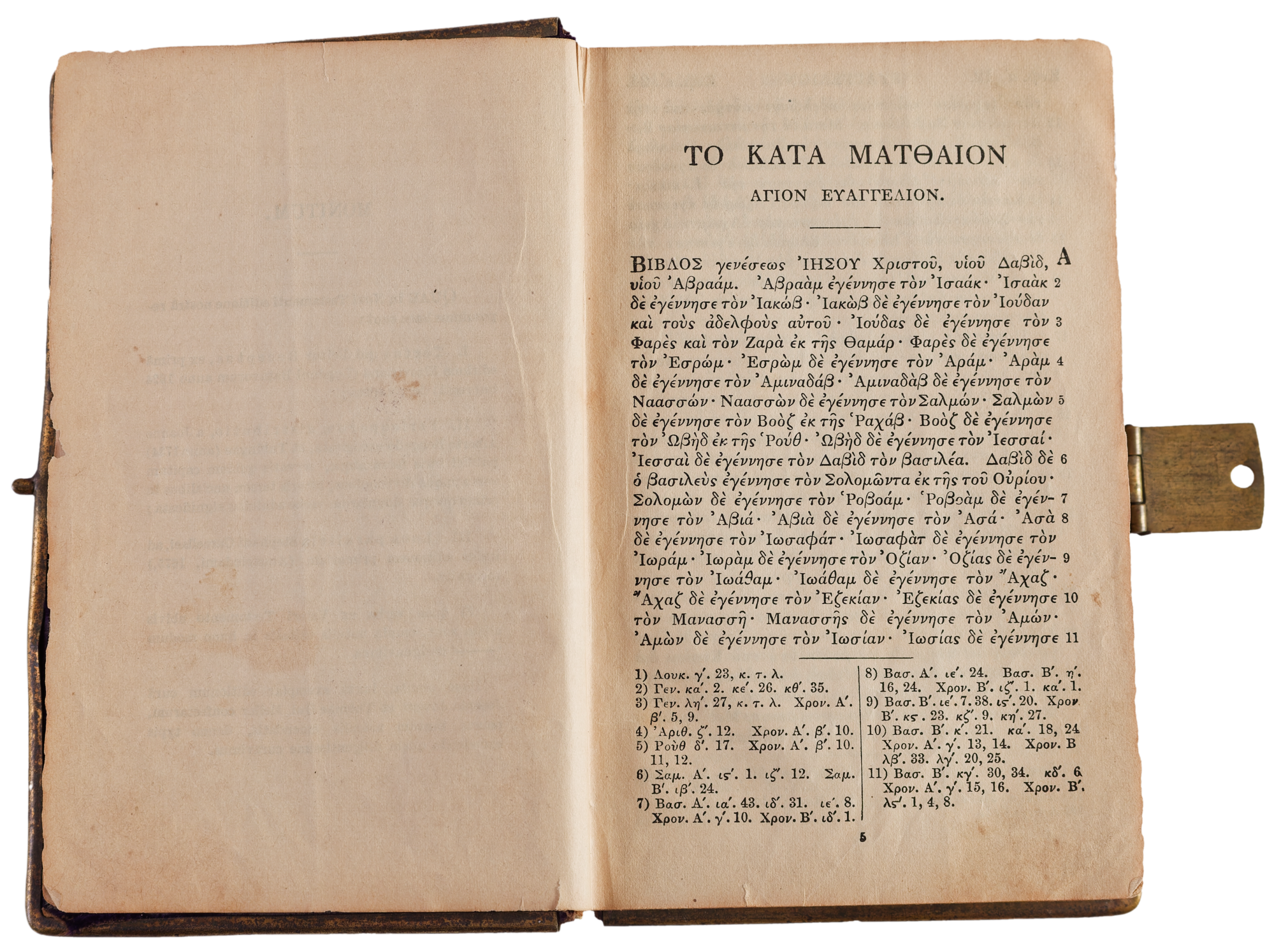
The Liturgical Books
Father Charalambos’s books, printed in centres of the Greek diaspora such as Venice, bear the marks of time: handmade paper with watermarks, cloth or leather spine reinforcements, linen-thread stitching, uneven cuts, stains, tears, and repairs that attest to years of use in a priest’s hands.

Their physical condition is a living testimony to the history of liturgical books in the Ottoman Empire, prior to the industrialisation of printing and the mass production of paper.
The objects were kindly made available for photography by Maria Kartelia–Markoglou, Maria’s great-great-granddaughter.
Object Data

Inventory Number

1871

Date

Late 18th century

Ingredients

Dimensions

Provenance

Alaya, Asia Minor

DEEP VIEW

Museum of Alagiotes
ALAYA Cultural Space
5, Karolidou str.
14343 Nea Ionia, Greece
Research Access
Researchers of Asia Minor culture wishing to study objects from the permanent collection are invited to contact us at 6974 902336.

alaya.association

Σύνδεσμος Αλαγιωτών Νέας Ιωνίας Αττικής και Περιχώρων © 2026. CC BY-NC-ND 4.0
Με την υποστήριξη και υπό την Αιγίδα του Υπουργείου Πολιτισμού